- 政策解讀
- 經(jīng)濟(jì)發(fā)展
- 社會(huì)發(fā)展
- 減貧救災(zāi)
- 法治中國(guó)
- 天下人物
- 發(fā)展報(bào)告
- 項(xiàng)目中心

機(jī)動(dòng)車(chē)排放是造成霧霾天氣的重要污染源
2013年01月22日17:00 | 中國(guó)發(fā)展門(mén)戶(hù)網(wǎng) www.chinagate.cn | 給編輯寫(xiě)信 字號(hào):T|T
關(guān)鍵詞: 中國(guó) 雙語(yǔ) 北京 污染 霧霾 空氣 機(jī)動(dòng)車(chē) 排放 污染物 尾氣
|
|
??? 編者按:過(guò)去的一周,在惡劣的天氣條件下,北京和中、東部地區(qū)很多城市都經(jīng)歷了嚴(yán)重的空氣污染。數(shù)個(gè)空氣質(zhì)量監(jiān)測(cè)點(diǎn)都出現(xiàn)PM2.5爆表的情況。這種前所未有的嚴(yán)重污染引發(fā)了國(guó)內(nèi)外媒體的廣泛關(guān)注和報(bào)道,很多市民也表達(dá)了對(duì)惡劣空氣質(zhì)量的不滿(mǎn)。國(guó)際清潔交通委員會(huì)高級(jí)研究員Vance Wagner撰文指出,機(jī)動(dòng)車(chē)排放是造成霧霾天氣的重要污染源。
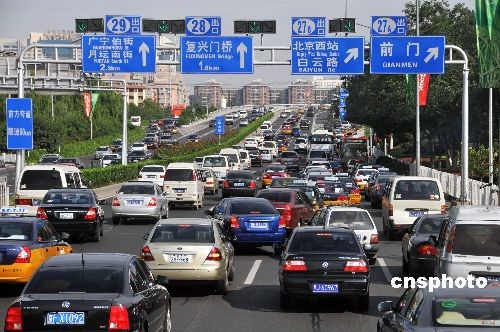
國(guó)際清潔交通委員會(huì)高級(jí)研究員Vance Wagner認(rèn)為,由于人們?cè)诮嚯x內(nèi)直接暴露于機(jī)動(dòng)車(chē)排放污染下,因而機(jī)動(dòng)車(chē)排放在人口相對(duì)密集的城區(qū)成為最大的直接影響人類(lèi)健康的污染源。隨著北京和其他中國(guó)城市機(jī)動(dòng)車(chē)數(shù)量的迅猛增長(zhǎng),機(jī)動(dòng)車(chē)帶來(lái)的污染在總體空氣污染中占的比重也越來(lái)越大。嚴(yán)格控制機(jī)動(dòng)車(chē)排放的重要性應(yīng)不亞于對(duì)待其他污染源如工廠(chǎng)和電廠(chǎng)。
中國(guó)需要全國(guó)性的、嚴(yán)格的機(jī)動(dòng)車(chē)污染防治政策。由于車(chē)輛(尤其是重型貨車(chē)和長(zhǎng)途客運(yùn)車(chē)輛)的流動(dòng)性,只有在全國(guó)范圍內(nèi)實(shí)施同等嚴(yán)格的標(biāo)準(zhǔn)政策才能確保機(jī)動(dòng)車(chē)污染得到切實(shí)治理而非轉(zhuǎn)移。近年來(lái),北京市采取了一系列針對(duì)其轄區(qū)范圍內(nèi)強(qiáng)有力的車(chē)輛污染防治措施(如實(shí)施了全國(guó)范圍內(nèi)最嚴(yán)格的新機(jī)動(dòng)車(chē)排放標(biāo)準(zhǔn),及最嚴(yán)格的油品標(biāo)準(zhǔn),并淘汰了50多萬(wàn)輛高污染車(chē)輛等)。然而,從空氣質(zhì)量改善上北京仍然舉步維艱。這主要是由于空氣污染的流動(dòng)性和區(qū)域性,大部分北京的污染(約37%-70%)來(lái)自于周邊地區(qū)的固定和移動(dòng)污染源。?
Vehicle Pollution Control Critical for Cleaner Air
Vance Wagner, a senior researcher from the International Council on Clean Transportation (ICCT) believes stringent controls to mitigate the pollution impacts of China's motor vehicles must be a key priority in Beijing's strategy to clean up its air.
He believes Beijing has made a series of impressive steps towards controlling pollution within its own boundaries in recent years. For example, Beijing already has the most stringent vehicle standards and the highest fuel quality standards in the country, and has scrapped over 500,000 high-polluting vehicles over the past two years.
However, the city still struggles to improve air quality because perhaps 34 to 70 percent of Beijing's pollution is regional, coming from dirty vehicles and industrial sources from the surrounding provinces.
To combat the problem, Wanger suggested China must take similar actions at the national level.
"Vehicles are typically by far the largest source of human exposure to air pollution in densely packed urban areas. Plus, the contribution of vehicle emissions to air pollution in China is increasing as the population of motor vehicles in Beijing and around China continues to grow rapidly," he wrote in his blog.
The Air Quality Index for PM2.5, minute particles which can damage the lungs, in most parts of the capital exceeded 500, the highest possible index rating, for several days this past month.
The Beijing Municipal government adopted emergency response measures in some areas to deal with the heavy pollution, including halting outdoor sports activities for primary and middle schools and suspended operations at polluting construction sites and businesses.
Opinion articles reflect the views of their authors, not necessarily those of Chinagate.cn.